
 By OkayGoal
Not so fun fact: girls’ soccer has the highest rate of ACL injury amongst all sports.
Even worse fact: girls’ soccer is the LEAST likely sport to do strength training year round.
Soccer girls are not getting in the gym enough.
Yet, ACL injuries in girls’ soccer players continue to be blamed on female anatomy, the menstrual cycle, the turf, and other factors that girls cannot control.
“We don’t have a ‘female’ problem. We have a load problem.” – Coach Carmen Bott
Put simply, their soccer load–running, jumping, cutting, and changing direction–is all overpowering their strength load. When the sport-specific load exceeds the muscle tolerance, it equals injury.
The same people who are shouting “it’s the turf!” or “it’s their periods!” are the same people failing to get their female athletes to lift heavy in the gym, and protect their knees against the high forces in the game.
The knee joint is protected by the quadriceps, hamstrings, calves, adductors, and gluteus maximus and gluteus medius muscles, and is also stabilized by a strong upper body and core. Girls soccer players at a minimum need to be deadlifting their body weight for several reps, but ideally, working toward 1.25x their body weight for three reps.

They should also be working toward achieving at least one perfect pull-up unassisted. And then some.
Ask any girl on the average ECNL, ECNLR, or GA team what her dead lift, front squat, or pull-up numbers are, and many can’t answer. They don’t strength train year-round. They might do a few-month program during the off-season, then peace out as soon as the season starts.
How can they work toward better strength numbers relative to body weight if they aren’t consistent?
How can they work toward heavy lifting if they work hard for just a summer off-season, then wither away in-season? How can they be resilient and robust to the high forces in soccer if their hard-earned muscle atrophies for several months out of the gym? How can they truly bulletproof their hamstrings if they aren’t progressing their deadlift numbers?
Of course, you have a few who do take strength training year-round consistently, and these girls thrive. In the 14 years I’ve been working in performance, my athletes who strength trained consistently during the season 1-2x a week never tore their ACLs. For my consistent athletes, who never missed an in-season workout, and who had been training for over one year in the gym, we have a track record of zero ACL tears.
When the muscles around the knee stay strong, the forces in the game are less likely to go to the knee joint. When girls are taught proper deceleration and landing mechanics, focusing on high-quality jumps rather than quantity, they improve their knee stabilization. Too often, I see girls’ soccer teams doing SLOPPY plyometrics. As a result, they get sore and weak knees. No progress was made.
I challenge you to ask other girls their strength numbers.
What can they deadlift? What can they do with a split squat? How many perfect push-ups? And I’m not talking sloppy push-ups with the hips drooping below the shoulders, with a weak core. What about their pull-up form? Are they being taught to keep tension in their glutes and not swing up to the bar? Are girls progressing to pistol squats and being taught controlled eccentric movement on the way down, with full engagement of their core, and their posture not collapsing?
I’m sorry, but girls ARE NOT being taught proper core stability and are not being corrected on these basic movements. As a result, their cores are unstable and glutes are weak, which makes the knee unstable. It’s a total disaster.
ASK GIRLS THEIR NUMBERS. Many will give you a blank stare and give you nothing.
And this is the problem. They should strive to achieve these goals year-round in the gym. 1x a week at a minimum, up to 2x a week in season. They need to be becoming strong beasts.
My strength standards are high and they can only be met with consistent training for years. I did strength training since middle school and still do it today to maintain and keep building muscle.
Female athlete health should be a long-term pursuit, not a quick program.
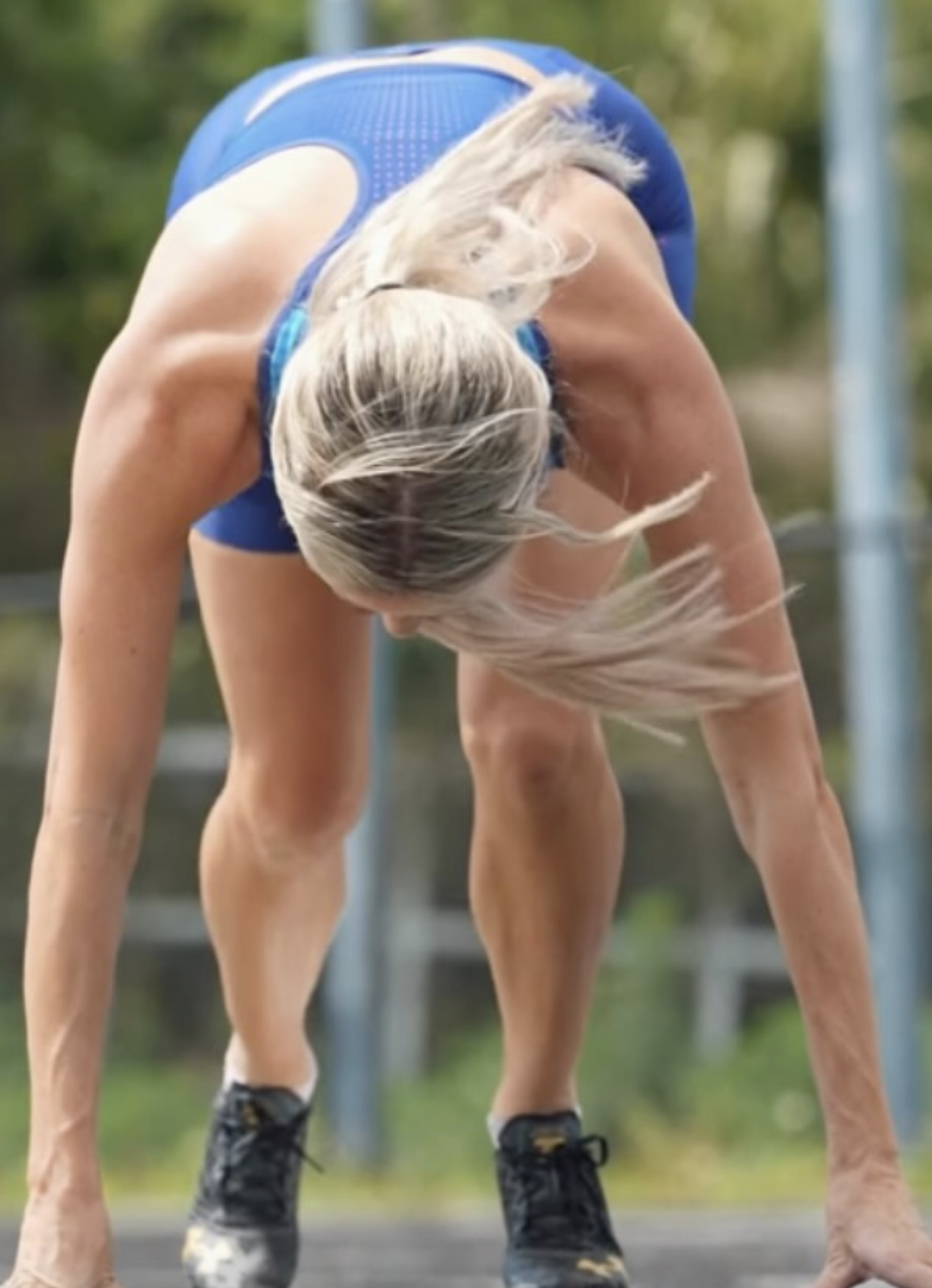
It’s also worth noting that injury reduction is more than just a body weight program with cute little balance drills and mini band work. It’s the consistent pursuit of gaining strength relative to body weight. It’s the consistent stimulation of the muscles to truly build. It’s about continuously lifting more, rather than staying at the same weight throughout the year. It’s a consistent challenge to the muscles.
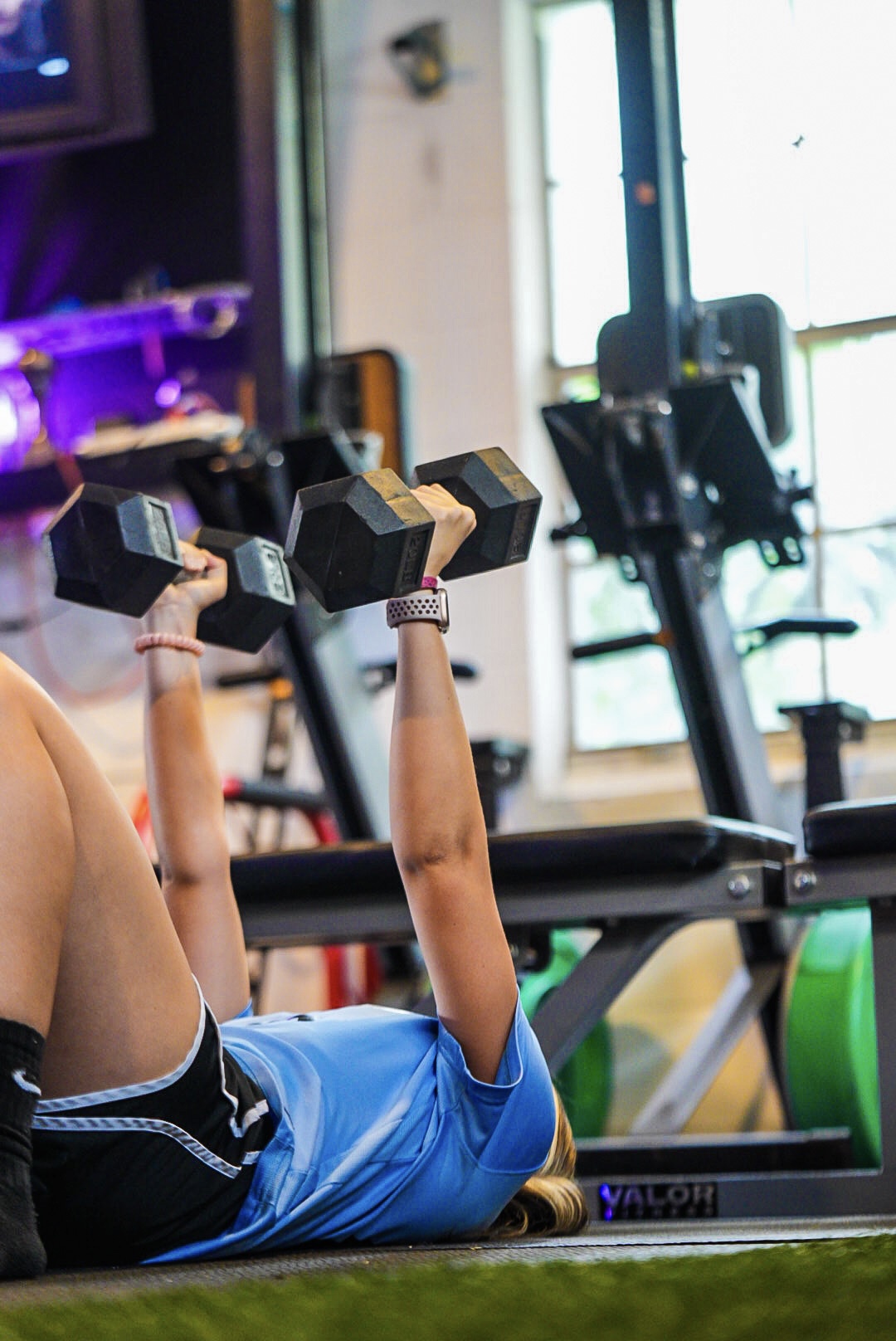
As strength coach Tony Gentilcore says, “lifting weights isn’t supposed to tickle.”
You must push, press, squat and pull some heavy iron.

Because guess what? An ACL tear happens with forces of up to 8x body weight. So yeah, I don’t think your itty bitty body weight balance drills in warm-up are doing much. I don’t think your crappy Nordic curls are doing much.
Even though this blog is for girls post growth spurt (usually on average, age 14 and up) to lift heavy, I want to give a shout out the younger ones: we need to stop specializing early, and start building A VARIETY OF MOTOR SKILLS to prepare for the coordination, stability and mobility required for heavier lifts in the weight room. We must lay a strong foundation first.
Another thing on these warm-ups: most coaches will implement “injury prevention” warm-ups, but form is sloppy and landing and body weight strength drills are NOT BEING COACHED PROPERLY. It’s a waste.
Girls must be under the guidance of a strength and conditioning professional to build true injury resiliency. They must be working with someone who understands long-term athletic development and each stage in their journey. Again, this blog isn’t for the young ones. Still, I can tell you my young ones are prepping their muscles by doing a variety of tasks – flips, crawls, cartwheels, hangs, pulls, rock climbing – so yes, body weight and resistance for some of them is fine during the most plastic years of motor skill development (ages 6-13). Still, it must be A VARIETY and not overuse certain muscle groups.
And one more thing: injury reduction for girls ages 14 and up is NOT a club-wide strength coach doing circuit-style workouts, bopping from station to station, hardly any rest time, with girls lifting the same weight every week. That’s making it look like there is injury reduction happening, but there’s NO progression of weight, no tracking of load, no assessment and re-assessment. It’s all fake. It’s just to check a box and act like everyone’s being virtuous for female athletes. A huge red flag is when girls stick with 10-15 pound dumbbells all the time. Their muscles have adapted to this weight over time, and now they’re stagnating if no load is added. Be on the lookout if this is happening…it’s a red flag.
Circuit-style workouts are not true strength. True strength is progressing to heavier loads, with a minimum of 2-3 minute rest in between sets.
A true strength training program must be tracked and progressed with an end goal in mind to get girls strong relative to their body weight. Girls must be truly be corrected on deceleration, plyometrics, and strength work.
And if girls are doing remote training with someone, they better have someone who requires their athletes to upload videos, who gives constant feedback on their technique, and who sees their athletes on Zoom every month.
Girls must LOAD in the gym to handle LOAD in the game.
With that said, don’t let girls wither away in season. Don’t just let them get in the gym for 2 months in the Summer, only to lose it all in the other 10 months in the year.
And most critically, stop blaming ACL tears on female anatomy and hormones when your girls are failing to get into the gym, and don’t even know their strength numbers.
ABOUT THE AUTHOR

Erica (Suter) Mulholland is a former college 3x All-American soccer player and now Hall of Famer from Johns Hopkins University. She is giving back to the game and to girls’ soccer players as a full-time speed, strength, and conditioning coach. She holds a Master of Science in Exercise Science and has been helping girls’ soccer players raise their performance and injury resiliency for 14 years.
Follow Erica on Instagram: https://www.instagram.com/fitsoccerqueen
Check out her podcast: THE STRONG FEMALE ATHLETE PODCAST
Get her book FEMALE ATHLETE HIGH PERFORMANCE
_
GIRLS SOCCER NETWORK: YOUR SOURCE FOR GIRLS SOCCER NEWS